
No ORM
no-orm in 3 steps
Section titled “no-orm in 3 steps”-
Define your Postgres schema:
CREATE TABLE penguins (id SERIAL PRIMARY KEY,name TEXT NOT NULL,species TEXT NOT NULL,waddle_speed_kph NUMERIC NOT NULL,favourite_snack TEXT, -- Optional: not all penguins have refined palates.date_of_birth TIMESTAMP WITH TIME ZONE NOT NULL); -
Run
no-ormagainst your database:npx no-orm generate -
Enjoy generated code in your Typescript server!
no-orm/public/tables/penguins.ts import { z } from "zod";import { type CommonQueryMethods, type ListSqlToken, sql } from "slonik";export const row = z.object({id: z.number().brand<"public.penguins.id">(),name: z.string(),species: z.string(),waddle_speed_kph: z.number(),favourite_snack: z.string().nullable(),date_of_birth: z.date(),});export type Row = z.infer<typeof row>;export type Id = Row["id"];// ...
Like what you see?
Section titled “Like what you see?”Or… Keep reading!
Motivation
Section titled “Motivation”At `no-orm, we believe you should be able to build a server without having to learn an ORM abstraction.
Abstractions work by hiding implementation details which makes using your database simpler, but also harder to understand and deeply configure. You gain simplicity but lose control.
Our opinion is that when you are writing a server, you want to be as close to the database as possible. Adding another layer on top often just obscures what your database is doing and increasing the likelihood to make poor database design decisions.
We recognise however that ORMs do have their benefits however, so the motivation of no-orm is to capture all of the best bits of an ORM while also preserving what makes PostgreSQL so great.
Philosophy
Section titled “Philosophy”We believe in a schema-first approach to server design.
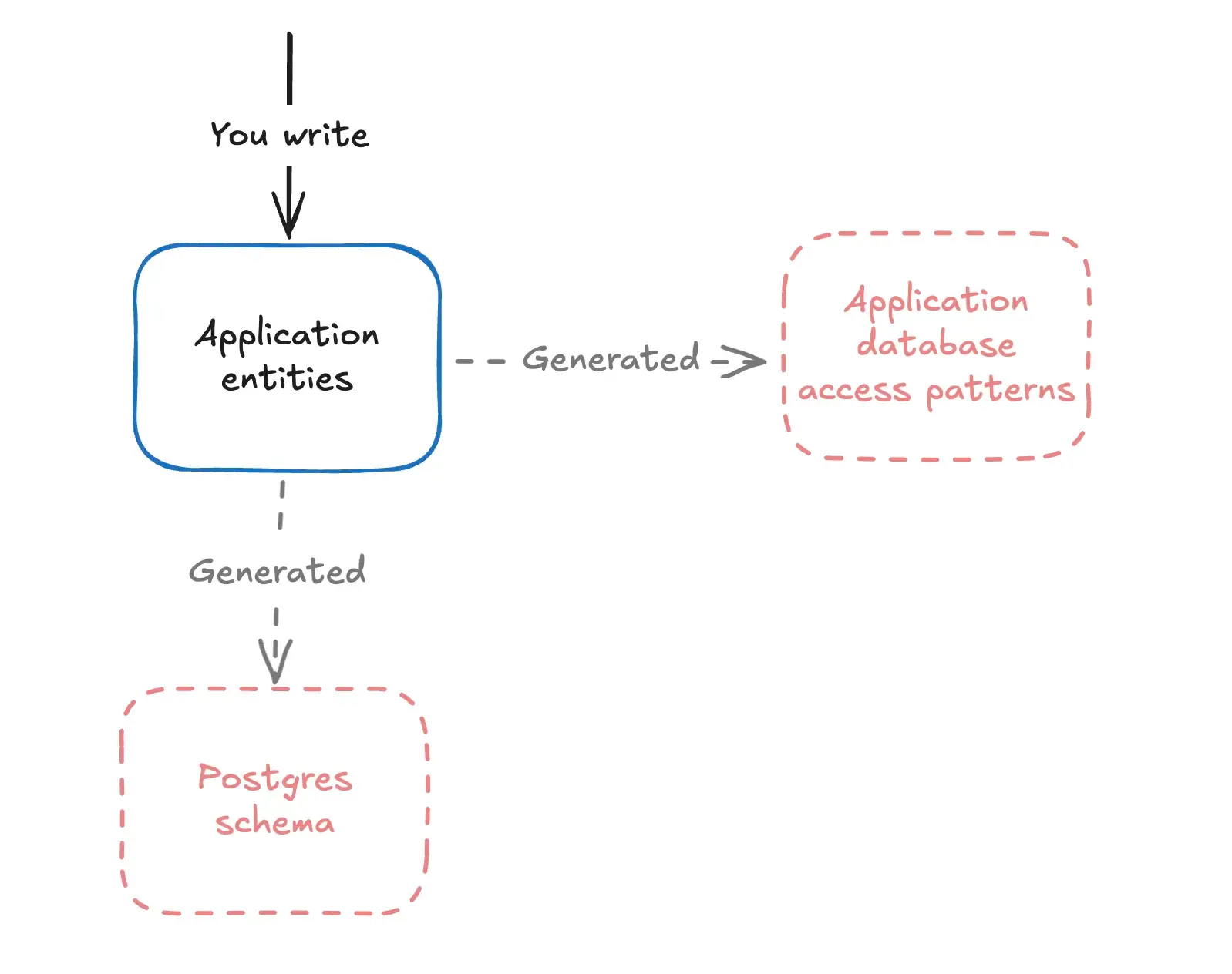
With a traditional ORM, you start by defining your entities and the ORM will generate your schema.
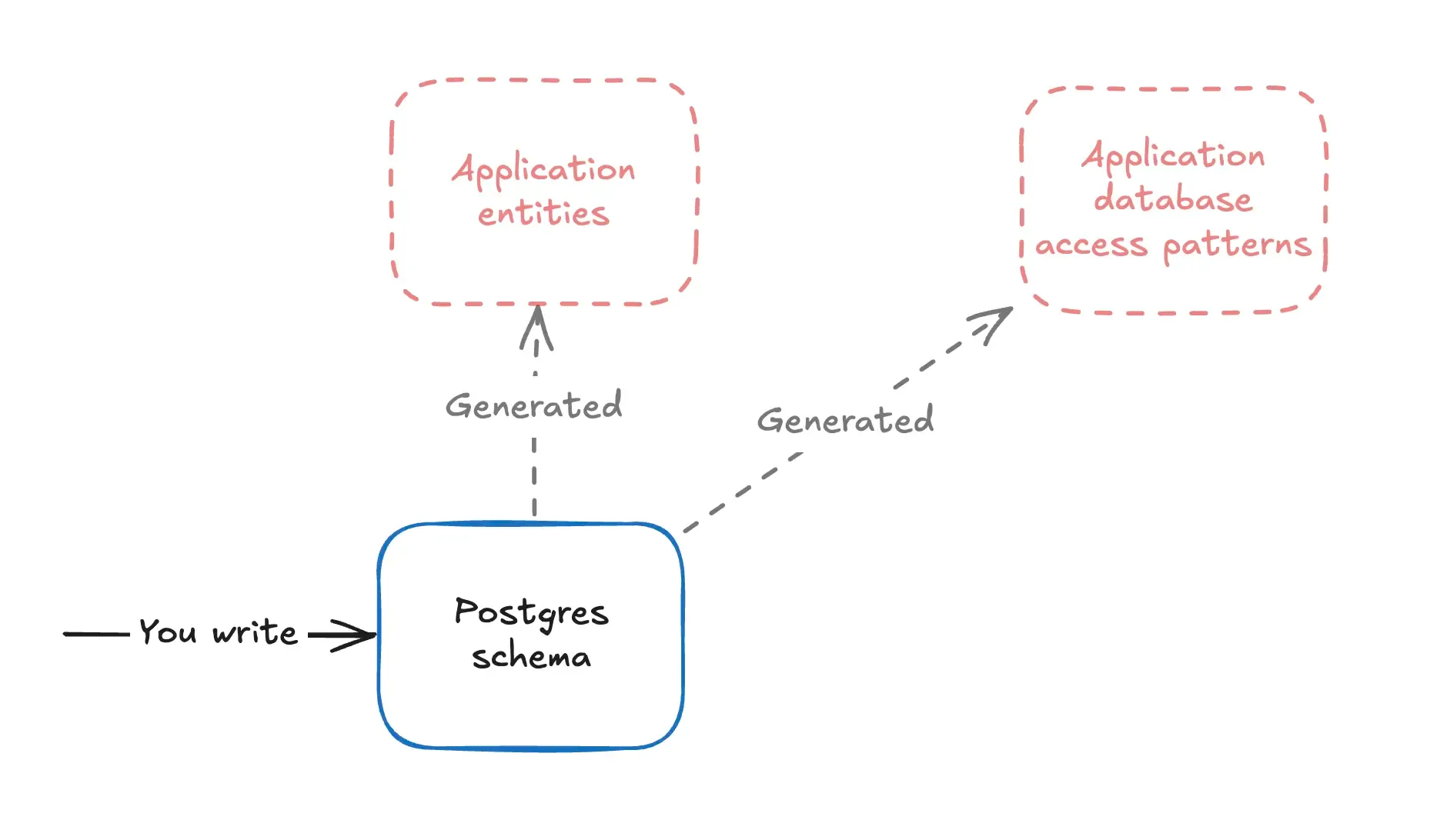
With no-orm, you start by defining your schema and we give you your entities!
Why schema-first?
Section titled “Why schema-first?”Most applications are CRUD operations combined in a way to solve a problem (not to be taken as a critique). Therefore, since less code is easier to maintain, we should try to minimise any additional code written outside of these operations.
This additional code can come in the form of critical business logic, but it can also come in the form of tech-debt masking poor database design.
A schema-first approach means that you can design your database without wading through ORM abstractions, helping you achieve your goal of reducing complexity and building maintainable software.
It’s not for everyone
Section titled “It’s not for everyone”You might love your ORM for various reasons.
Maybe you’re not familiar with SQL and prefer the abstraction. Maybe you believe your ORM provides you with useful features that raw Postgres doesn’t. Maybe your ORM is so coupled with the framework you are using that it’s impractical to use anything else.
That is completely understandable and if so, this tool probably isn’t for you!
Get started